
Requirements for connector terminals, pins and sockets
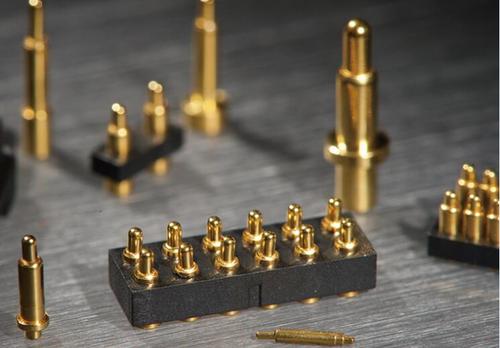
Connector terminals, pins and sockets play a vital role in electronic devices and mechanical systems. They are responsible for transmitting electrical signals and data. To ensure the stability and reliability of the connection, these components must meet a series of stringent requirements. First, the choice of materials is critical. Pins and sockets are usually made of highly conductive metal materials such as copper, aluminum or gold to reduce resistance and signal loss. Secondly, surface treatment is also very important. Common surface treatments include gold plating, silver plating and tin plating, which can improve corrosion resistance and oxidation resistance while enhancing electrical performance.
In addition, dimensional accuracy and mechanical strength are also important considerations. Pins and sockets must have precise sizes and shapes to ensure good physical contact and electrical connection. Mechanical strength determines their ability to resist deformation and wear during use. Insertion force and extraction force also need to be considered during design. Excessive insertion force may cause assembly difficulties, while too small extraction force may cause unstable connection.
Read recommendations:
High current probe M1973 6.0X10(3A)Elastic electrode manufacturer
M2500 1.5x12.4(2A)Magnetic BOGO pin Vendor
Introduction to the functional characteristics of the wireless probe.gene probe Vendor
What are the main characteristics of high frequency needles? Is it expensive?
13631657540 (Mr. He)
86-755-89900596
86-755-89900595
About

Product
POGOPIN
POGOPIN connector
Case
Support
News
 CN
CN Location:

